Somatic Symptom Disorder
Somatic symptom disorder is characterized by excessive worry about having a serious medical disease. This fear is based on the...
What is Somatic Symptom Disorder?
What is a Somatic Symptom Disorder?
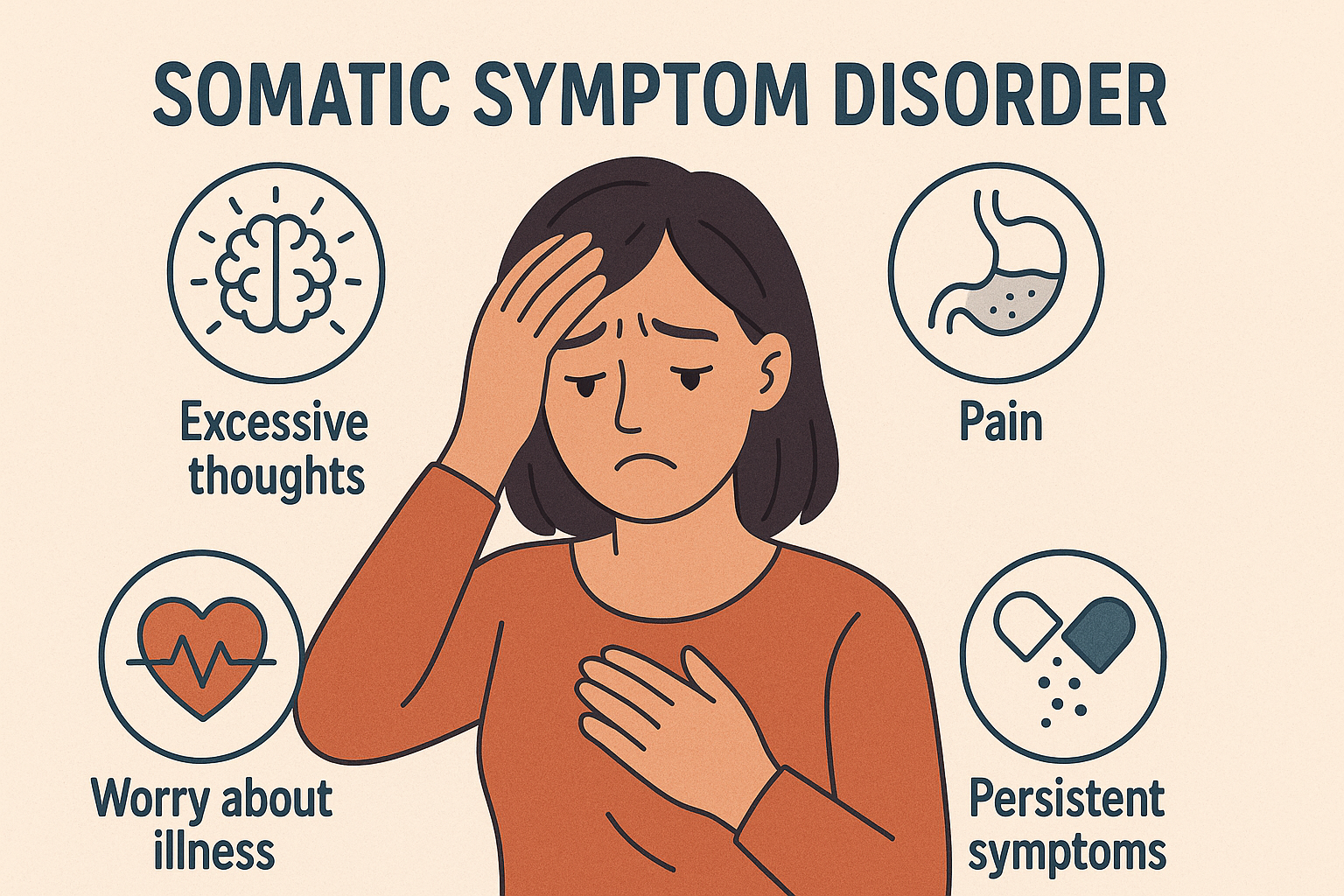
Somatic symptom disorder is characterized by excessive worry about having a serious medical disease. This fear is based on the person’s misinterpretation of physical symptoms, even though medical tests confirm that there is no serious medical illness. This condition was earlier referred to as hypochondriasis.
How to identify Somatic Symptom Disorder?
Physical complaints like pain or discomfort
Constant worry about health
Interpreting regular physical sensations as indications of a serious medical illness
Frequent doctor visits and often changing doctors
Frequent medical tests and checking the body for signs of illness
What causes a Somatic Symptom Disorder?
Focusing excessively on bodily sensations or having a low threshold for physical discomfort have been associated with this condition. Early childhood experiences and learned behaviours contribute to its development as well. Research has suggested that alterations in brain functions may play a role. Patients with mental health disorders like depression or anxiety are also more likely to have somatic symptom disorder.
When to seek help?
Even though the symptoms of somatic symptom disorder cannot be explained by a medical condition, it is a type of mental health disorder. It is important to realize that the person is not ‘faking’ being sick, but is actually experiencing distress. The distress or preoccupation with being sick is so intense that it interferes with every aspect of the person’s life, including their work, social interactions and daily routine. Somatic symptom disorder is diagnosed when this distress continues for more than 6 months.
What is the treatment for a Somatic Symptom Disorder?
Cognitive behavioural therapy aims to correct faulty ways of thinking about physical sensations. Psychodynamic therapy works on building insight into the patient’s patterns of coping and responding to stressful situations. Family therapy also plays a role, especially in the case of children. Medicines may sometimes be used to treat underlying mental health conditions like depression or anxiety.